Breaking: 26-Year-Old Zelda Fan Port ZQuest Classic Powers Thousands of Fangames, Developers Reveal
A fan-made PC port of the original NES Legend of Zelda, first released in 1999, has quietly evolved into one of the most enduring fangame engines in gaming history. Known today as ZQuest Classic, the open-source tool has enabled thousands of custom 'quests' and is still maintained by a small team of volunteers. The engine's simplicity allows creators to build entire games without coding knowledge, making it a unique bridge between level editors like Mario Maker and full game engines like Godot.
According to current lead developers Connor Clark and Emily Venezia, ZQuest Classic has become a 'whale fall' for the Zelda modding community—a nutrient-rich resource that continues to spawn new content more than two decades after its creation. The project originally started as Zelda Classic, an unlicensed port of the NES game written from scratch by a hobbyist known as Phantom Menace. Over time, the built-in quest editor turned the port into a factory for fan games.
Background
The original Zelda Classic was released as a freeware PC game in 1999, recreating the entire NES Legend of Zelda using original code. Its creator built a 'quest editor' that allowed users to design their own dungeons, item placements, and storylines within the same 8-bit style. The editor quickly gained traction among fans who lacked programming skills, offering a drag-and-drop approach to game design.
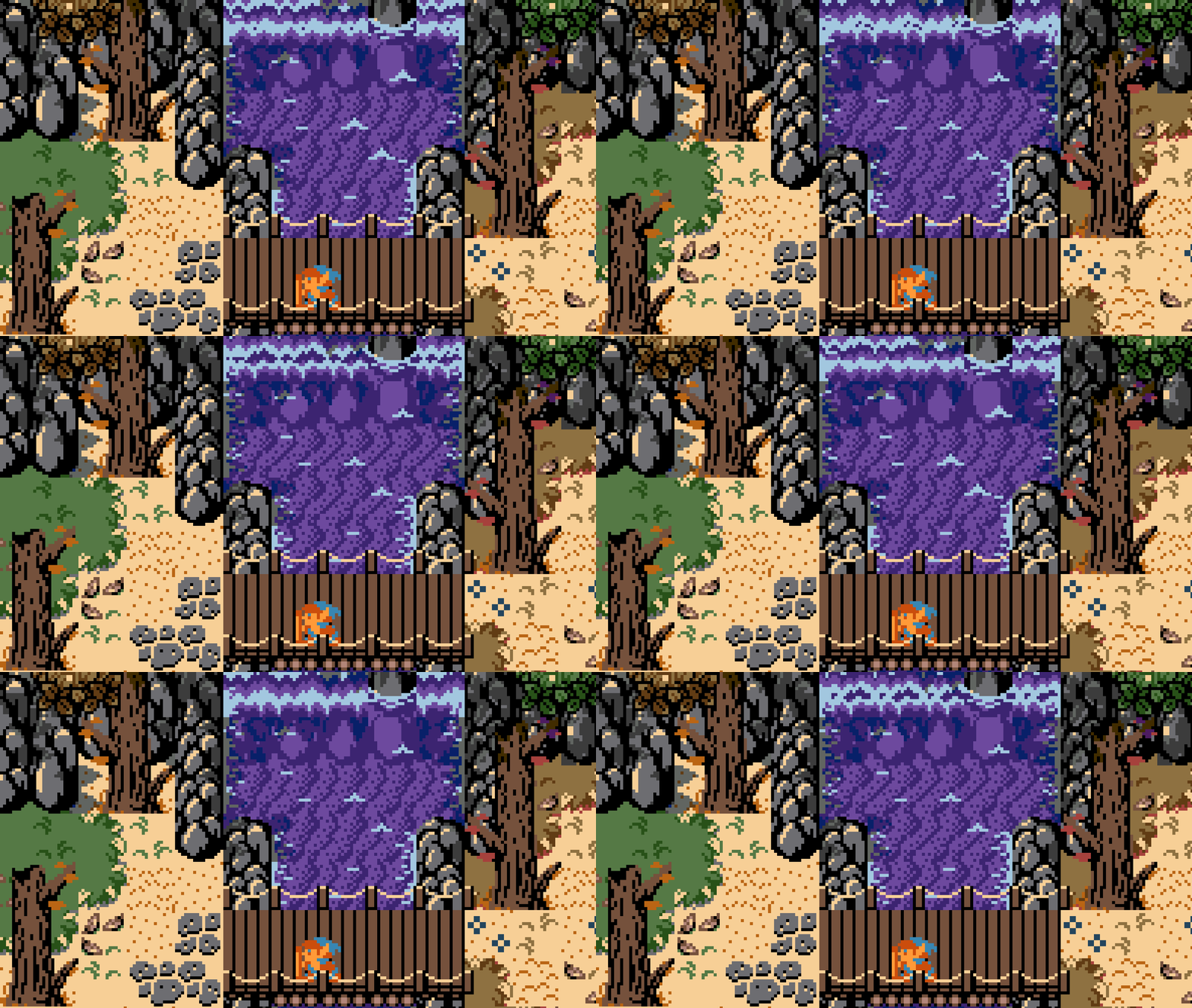
By the early 2000s, the community had produced hundreds of custom quests, from simple remixes to entirely new adventures. The project later renamed itself to ZQuest Classic to distance from the 'Zelda' trademark, though it remains unaffiliated with Nintendo. Today, over 26 years later, the engine continues to receive updates from volunteers Connor Clark and Emily Venezia, who themselves discovered the tool as children.
The 'Whale Fall' Effect
Venezia explained in an exclusive interview that ZQuest Classic occupies a unique niche. “It is a very simple and classic style. You go to other game engines, like, sure, Godot is nice and easy to use, but you're not moving your character around the screen without writing your own character controller script,” she said. “ZQuest? You enter. You go. You maybe toggle some check boxes to change how some settings work, maybe tweak a couple numbers, but for the most part you don't need any coding knowledge yourself.”
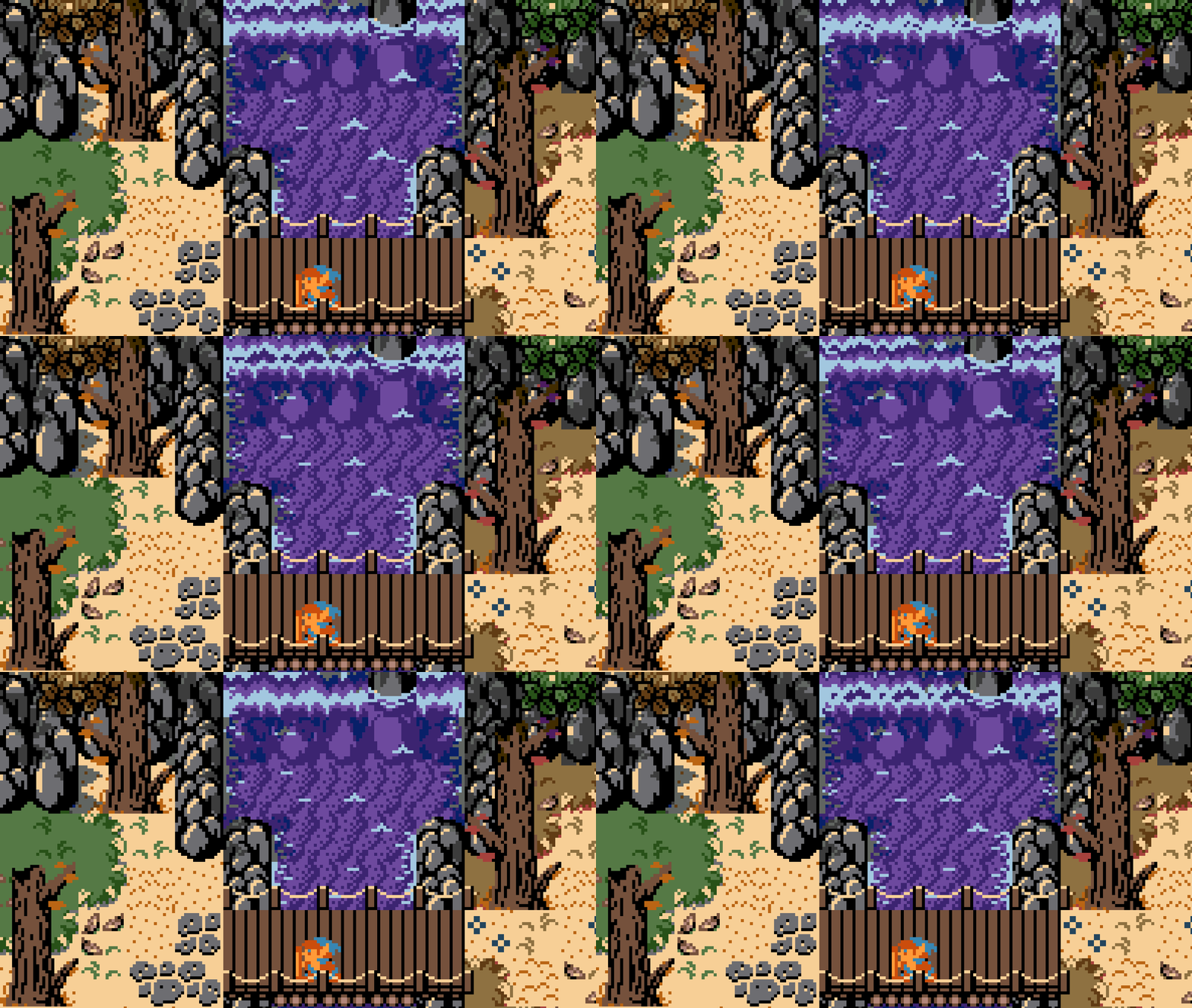
The engine has been used to create everything from Tetris clones to full-scale original games that only loosely resemble The Legend of Zelda. This adaptability has kept the community active even as commercial game engines have become more accessible.
What This Means
ZQuest Classic demonstrates how modding tools can outlive their original context, becoming platforms for creativity that transcend a single franchise. The project's longevity—now spanning more than a quarter century—shows that even unofficial, grassroots tools can sustain vibrant communities without corporate support.
For amateur game developers, ZQuest offers a rare on-ramp that requires no coding skills. As detailed above, its checkbox-driven design lowers the barrier to entry while still allowing complex gameplay logic. This positions the tool as a potential educational resource for teaching game design fundamentals.
However, the legal gray area remains. Because ZQuest Classic is based on unlicensed use of Nintendo's intellectual property, its future depends on remaining under the radar. The developers have taken steps to distance the project from official Zelda branding, but the core mechanic of recreating 'Zelda-like' games is inherent to its identity.
Despite these risks, the whale fall continues to feed. New quests are uploaded regularly, and the volunteer development team plans to release further updates. For the thousands of creators who grew up with the editor, ZQuest Classic is not a relic—it's a living engine that still fuels their passion.