NASA's Psyche Spacecraft Slingshots Past Mars on Journey to Metal Asteroid
Mars Flyby: A Crucial Gravity Assist
On May 15, NASA's Psyche spacecraft successfully executed a close flyby of Mars, passing just 2,864 miles (4,609 kilometers) above the planet's surface. This maneuver, known as a gravity assist, used Mars's gravitational field to boost the spacecraft's speed and alter its trajectory without expending any onboard fuel. During the encounter, Psyche's multispectral imager captured stunning images, including a representative color view of the double-ring crater Huygens and the heavily cratered southern highlands. These images not only provide scientific value but also serve as a testament to the spacecraft's health and navigation precision.
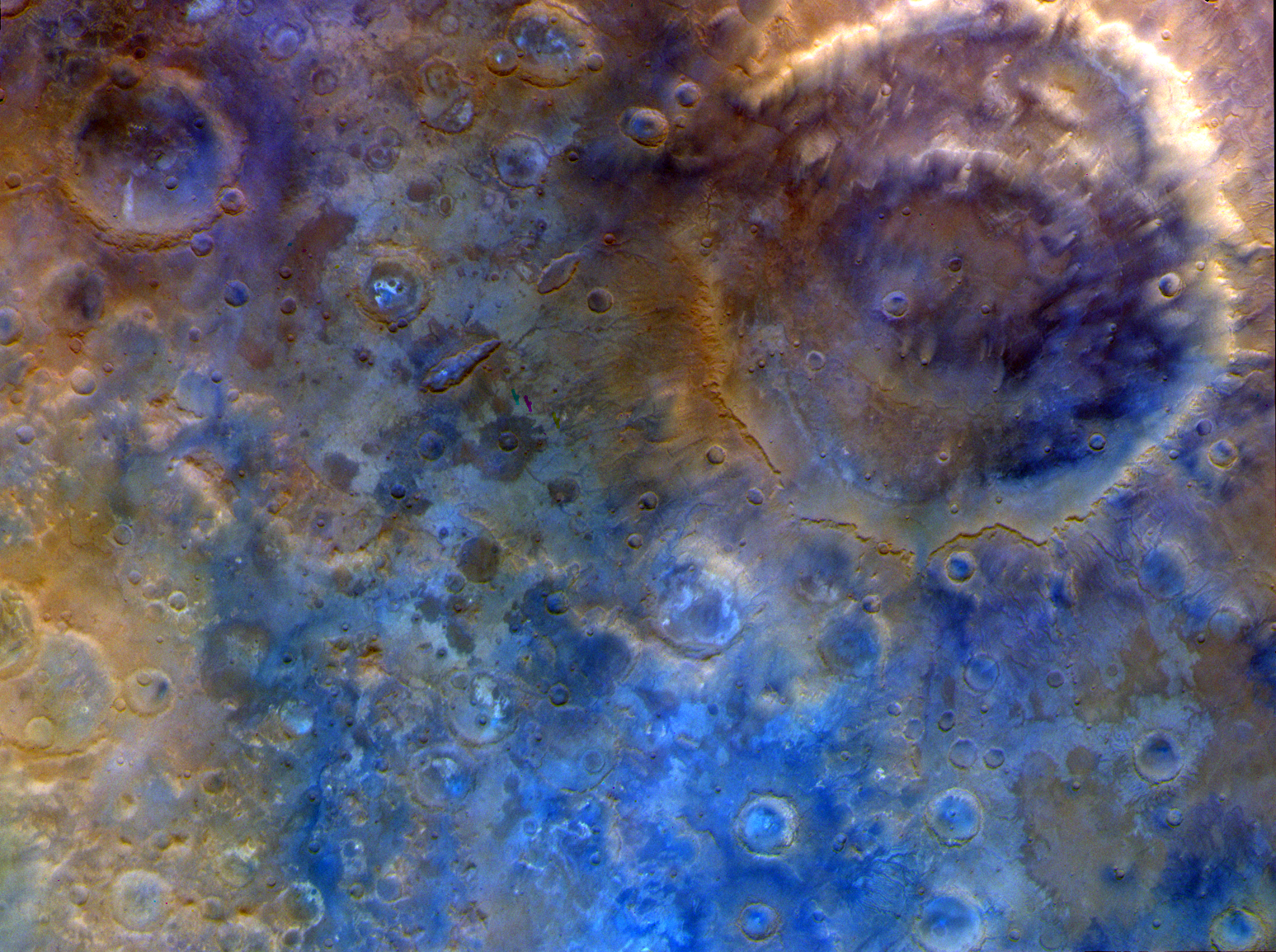
How Gravity Assist Works
Gravity assists are a staple of deep-space missions. By flying close to a planet, a spacecraft can exchange momentum with the planet's motion, gaining speed and changing direction. For Psyche, this boost was essential to set it on course for its ultimate destination: the metal-rich asteroid 16 Psyche. The flyby also adjusted the spacecraft's orbital plane, aligning its path perfectly for the rendezvous planned for August 2029. This precision maneuver demonstrates the expertise of the mission team at NASA's Jet Propulsion Laboratory (JPL) and Arizona State University (ASU).
Mission Goals: Unlocking Planetary Secrets
The Psyche mission is designed to explore an unusual world—an asteroid that may be the exposed metallic core of an ancient planetesimal. If confirmed, 16 Psyche could offer a unique window into the violent processes that shaped Earth and other rocky planets early in solar system history. By studying the asteroid's composition, geology, and magnetic properties, scientists hope to answer fundamental questions about planetary formation and differentiation.
Key Scientific Objectives
- Map the asteroid's surface in high resolution using multispectral imaging.
- Characterize its elemental and mineral composition via gamma-ray and neutron spectrometers.
- Measure its magnetic field to determine if it retains a remanent magnetization from an ancient dynamo.
- Investigate the asteroid's shape and gravity field using radio science.
These observations will help determine whether 16 Psyche is indeed a stripped core or merely a primitive body rich in metals. Either outcome would significantly advance our understanding of solar system evolution.

Timeline and Next Steps
Following the Mars flyby, Psyche is now coasting toward the main asteroid belt. Over the next six years, the spacecraft will undergo routine checkouts and trajectory corrections before arriving at its target. Once in orbit around 16 Psyche, the mission will spend about 21 months conducting science operations from decreasing altitudes, eventually mapping the entire surface.
Arrival in August 2029
When Psyche enters orbit around the asteroid in August 2029, it will become the first spacecraft to study a metal world up close. The mission team expects to release a steady stream of images and data, allowing the public to follow along as the asteroid's mysteries unfold.
Why This Mission Matters
Psyche represents a pioneering effort in planetary science. Unlike typical rocky or icy asteroids, metallic asteroids are poorly understood. By visiting 16 Psyche, NASA is taking a bold step to explore a type of object that may hold clues to Earth's own core—a region we can never directly sample. The successful Mars flyby not only propels the spacecraft forward but also demonstrates the power of gravity assists in enabling ambitious deep-space exploration. For more details and additional images from the flyby, scroll to the top of this article or visit the official NASA mission page.
Image credit: NASA/JPL-Caltech/ASU