Everything You Need to Know About Ubuntu Pro Enrollment in the New Security Center
With the release of Ubuntu 26.04 LTS, Canonical has streamlined how users manage system updates and subscriptions. The familiar Software & Updates utility is gone from the default installation, replaced by integrated Ubuntu Pro settings directly inside the Security Center app. This shift aims to simplify the enrollment process for both personal and business users while reducing interface clutter. Below, we answer common questions about this change, covering everything from the new layout to the free subscription limits.
What exactly changed in Ubuntu 26.04 regarding Ubuntu Pro settings?
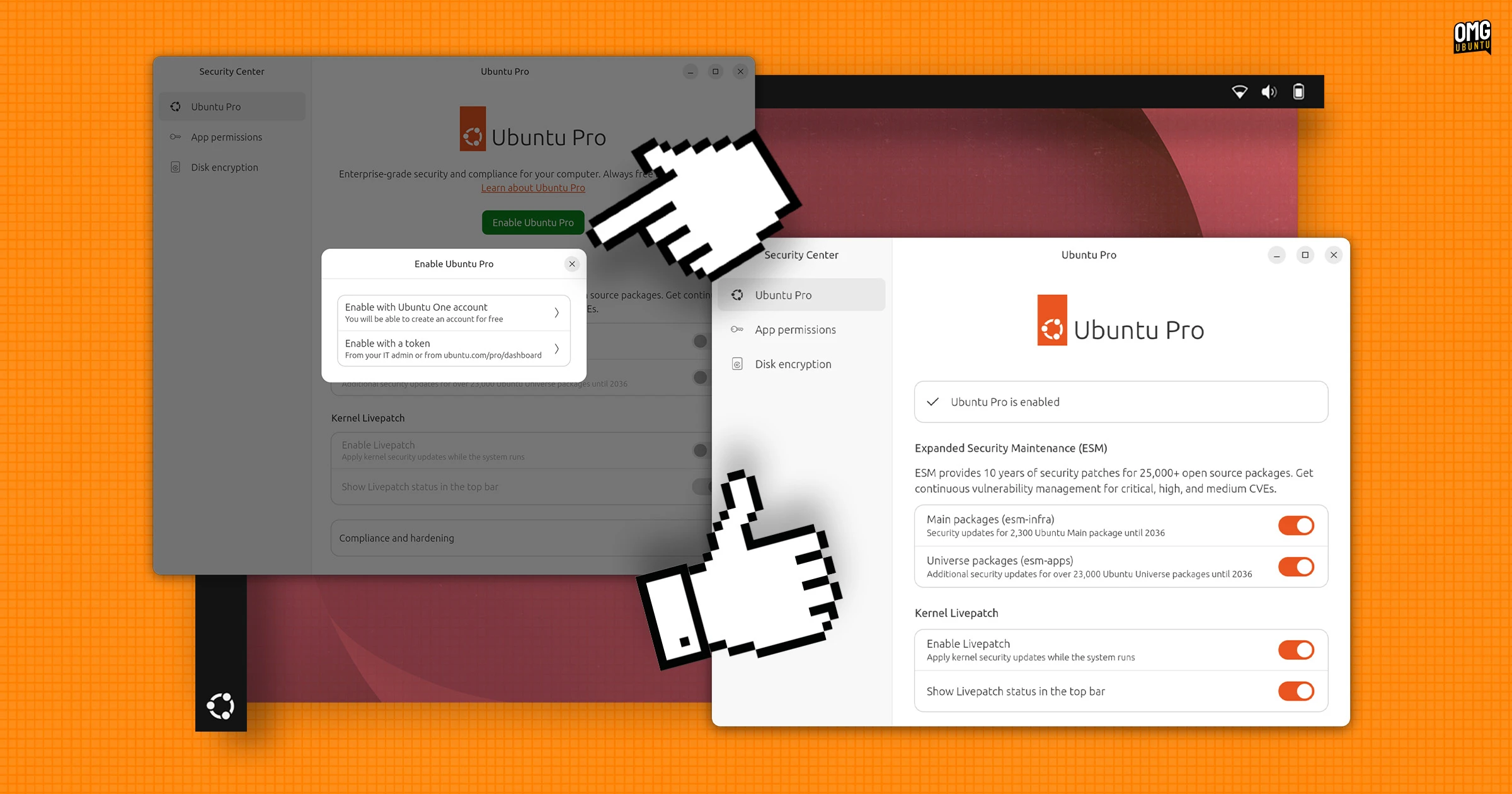
The most noticeable change is the removal of the Software & Updates utility from the default Ubuntu 26.04 LTS desktop installation. Previously, users accessed Ubuntu Pro via that tool’s dedicated tab. Now, all Ubuntu Pro settings live inside the Security Center app, which ships by default. The options themselves mirror what you’d find in the old tab, but they’re presented in a more spacious layout. Each toggle and preference includes clearer, concise explanations, making it far less cramped. This redesign not only improves visual appeal but also helps users understand what each setting does without needing extra documentation. For anyone familiar with the old interface, the transition is straightforward—you’ll find the same core choices, just organized better.

Is the setup experience actually better than before?
Yes, mostly. The enrollment flow has been refined to be smoother and more intuitive. In the old Software & Updates tab, you often had to dig through several submenus to enable Pro or manage subscriptions. Now, the Security Center places the Ubuntu Pro section front and center, with a clean wizard that guides you through authentication and subscription assignment. The process still requires an Ubuntu One account for personal use, but the steps are fewer and the feedback more immediate. For example, after entering your token, you see a clear success message and a summary of activated services (like Livepatch or ESM). The only minor downside is that legacy users who relied on the old utility may need a moment to adjust, but overall, the new experience reduces friction and makes enabling Pro feel effortless.
Who qualifies for a free Ubuntu Pro subscription?
Ubuntu Pro is free for personal use on up to five devices. This includes individual users, hobbyists, and small-scale deployments where you’re managing a handful of machines yourself. To get the free subscription, you simply need an Ubuntu One account (which is free to create) and then attach it to your devices via the Security Center. Once enrolled, you get access to all the essential Pro benefits: 10 years of security updates via ESM (Extended Security Maintenance), Livepatch to apply critical kernel patches without rebooting, and Landscape management for a small number of machines. If you exceed five devices or use Ubuntu in a commercial environment, you will need to purchase a paid subscription. But for personal setups, the free tier is generous and perfectly adequate for keeping your system secure.
When do I need a paid subscription instead of the free one?
A paid subscription is required for businesses, enterprises, or any organization managing a fleet of Ubuntu installs beyond five devices. Even if you’re a solo developer but using the system for commercial work (e.g., selling a product built on Ubuntu), you fall under the paid tier. Paid plans start with Ubuntu Pro (Infra) which covers all security and compliance needs, and scale up to Ubuntu Pro + Support for those requiring SLA-backed assistance. The pricing depends on the number of machines and the support level. For system administrators handling dozens or hundreds of servers, the paid subscription provides not only unlimited device enrollment but also access to Landscape for centralized management, FIPS and Common Criteria compliance modules, and 10 years of patch coverage. If you’re unsure, the Security Center will let you know when you hit the free limit, making it easy to upgrade as needed.
How do I enroll my device in Ubuntu Pro via the Security Center?
Enrolling is straightforward. First, open the Security Center from your application menu. You’ll see a dedicated Ubuntu Pro tile or section. Click on it to start the process. You’ll be prompted to log in with your Ubuntu One account or create one if you don’t have it. After authentication, the system will automatically detect whether your device is eligible for a free subscription. If yes, you simply confirm the device token (which is generated for you), and enrollment completes in seconds. For existing Pro users, you can also manually enter a subscription token obtained from the Ubuntu Pro portal. The interface provides real-time status updates and a summary of activated services once done. No command-line work is required—everything is handled graphically. For fleet management, administrators can push tokens via Landscape or use the security center’s bulk enrollment feature (requires paid subscription).
Why did Canonical remove the Software & Updates utility?
Canonical’s decision to drop the Software & Updates utility from the default install was driven by a desire to reduce duplication and simplify the user experience. The old utility had become a catch-all for multiple settings (drivers, updates, and Pro), which often confused beginners. By moving Ubuntu Pro into the Security Center—an app specifically designed for security-related tasks—Canonical aligns the interface with modern design principles: one app, one purpose. This also allows the team to focus on refining the security center with better explanations and streamlined workflows. Moreover, some settings from Software & Updates (like update frequency) have been integrated into the Settings app. The change is part of a broader effort to clean up Ubuntu’s default app set and make it more accessible to newcomers while retaining power-user functionality. Feedback so far has been positive, especially regarding the reduced clutter.
How does the new layout improve the usability of Ubuntu Pro settings?
The new layout in the Security Center addresses one of the biggest complaints about the old Software & Updates tab: cramped and confusing design. Previously, the Pro settings were squeezed into a small window with limited space for descriptions. Now, each option gets its own section with generous padding, clear headings, and concise but informative text. Toggles for Livepatch, ESM, and Landscape are separated, and you can expand additional details for each feature. The token entry field is prominently placed, avoiding the need to scroll endlessly. The entire experience feels more like a modern settings panel rather than a legacy configuration dialog. For new users, this reduces the learning curve; for veterans, it makes managing multiple Pro settings faster. The improved readability also helps prevent accidental misconfigurations, since you immediately see the consequences of each toggle. Overall, the revamped layout makes Ubuntu Pro feel more approachable and less like an afterthought.