10 Shocking Security Gaps in European Government Websites Exposed by SecurityBaseline.eu
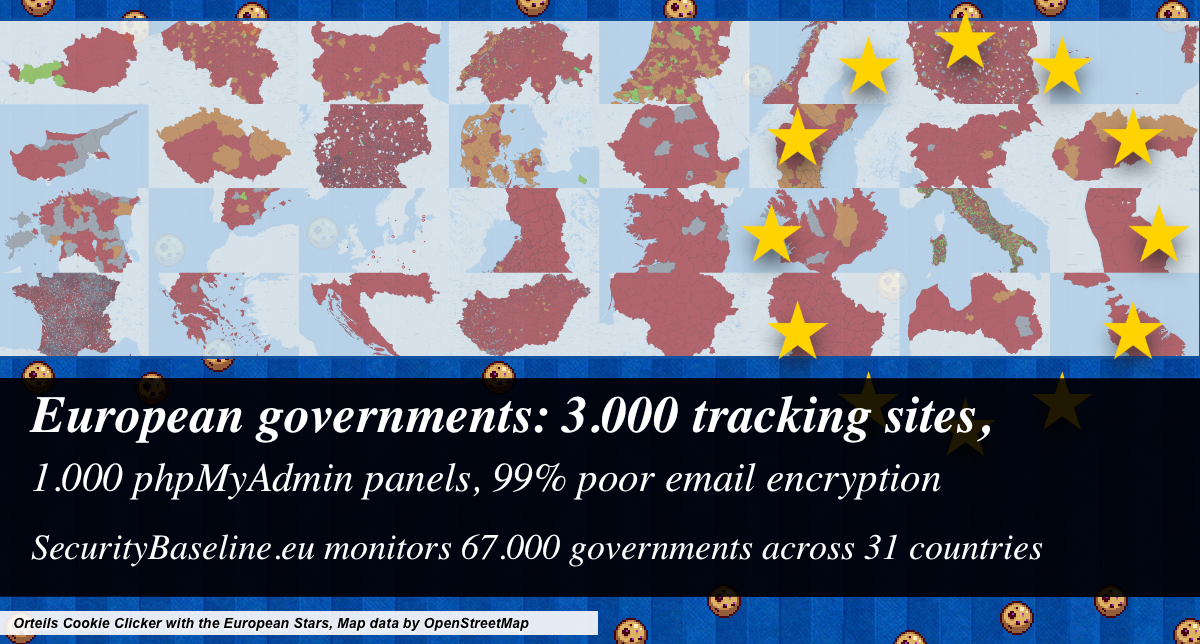
European citizens trust their governments to protect their data, but a recent audit by the Internet Cleanup Foundation reveals a troubling reality. The SecurityBaseline.eu project scanned thousands of government domains across Europe, uncovering a massive vulnerability landscape: over 3,000 tracking sites embedded in official pages, nearly 1,000 exposed phpMyAdmin installations, and a staggering 99% of government email servers using weak encryption. This article breaks down the top ten findings from this eye-opening report, showing where our digital defenses are failing and what needs to change.
1. Tracking Scripts Run Rampant on Official Domains
The audit found more than 3,000 government websites loaded with third-party tracking scripts. These snippets, often from analytics or advertising companies, can collect user behavior data without explicit consent. Many domains imported trackers from US-based firms, raising concerns about data sovereignty under GDPR. Worse, some trackers were embedded in pages handling sensitive information like tax filings or health records. SecurityBaseline.eu recommends immediate removal or strict anonymization of such scripts, and for governments to host their own analytics solutions like Matomo. For more on safe analytics, see item 6.
2. Thousands of Exposed phpMyAdmin Interfaces
Nearly 1,000 government-affiliated phpMyAdmin installations were found accessible from the public internet. phpMyAdmin is a popular database administration tool, but leaving it exposed invites brute-force attacks and SQL injection. Many instances ran outdated versions with known vulnerabilities. The report highlights that even a single compromised database could leak sensitive citizen records. The fix is simple: restrict access by IP, use VPNs, or remove the tool entirely when not needed. Check item 4 for similar password issues.
3. 99% of Government Email Servers Use Weak Encryption
When emailing a government department, your message might be sent in plain sight. SecurityBaseline.eu tested STARTTLS configurations on .gov domains and found that 99% of servers downgraded to unencrypted connections or used outdated protocols like SSLv3. This makes it trivial for attackers to intercept sensitive correspondence. Only a handful of countries (Estonia, Finland) scored well. The recommended fix is to enforce TLS 1.2+ and implement MTA-STS policies. For a deeper look at encryption gaps, see item 9.
4. Default Credentials Still in Use
Incredibly, several government systems still have default usernames and passwords like admin:admin or root:toor. The scanners detected hundreds of services (CMS, database front-ends, VPN portals) that accepted such credentials. Attackers can easily automate login attempts using known default lists. Governments must enforce password policies and change defaults immediately after installation. For related issues with outdated software, see item 5.
5. Outdated Software Versions Everywhere
The audit revealed that many government websites run ancient versions of content management systems (e.g., WordPress 3.x, Drupal 6) and web servers (Apache 2.2, Nginx 1.4). These versions contain publicly known exploits that are trivial to use. Patching is often delayed due to bureaucratic approval processes. The report suggests automated vulnerability scanning and shorter update cycles. Governments should also decommission end-of-life systems entirely. More on proactive monitoring in item 8.
6. Insecure Analytics and Cookie Practices
Beyond tracking scripts, many sites use analytics tools that store cookies without proper consent banners. The project found that over 60% of government sites didn't have a compliant cookie notice, and those that did often pre-checked marketing cookies. This violates GDPR requirements for explicit, opt-in consent. Furthermore, some analytics data is sent to servers outside the EU, creating legal risks. Governments should adopt privacy-friendly analytics like Plausible or Simple Analytics. See item 1 for broader tracking issues.
7. Missing or Weak HTTPS Implementation
While most government domains now use HTTPS, about 15% still serve pages over HTTP or have misconfigured SSL/TLS. Some sites mix secure and insecure content (mixed content warnings), breaking encryption. Others support weak cipher suites like RC4 or use certificates from obscure CAs. The report recommends using HTTPS as default, enabling HSTS headers, and regular certificate validation. For email encryption issues, refer back to item 3.
8. No Security Headers on Government Sites
Security headers like Content-Security-Policy (CSP), X-Frame-Options, and X-Content-Type-Options are missing on most government pages. Without CSP, sites are vulnerable to cross-site scripting (XSS). Without X-Frame-Options, they can be embedded in phishing frames. The audit found that less than 2% of domains had a proper CSP deployed. Implementing these headers is a low-cost, high-impact improvement. For more on protection against attacks, see item 5 about patching.
9. Email Server Misconfigurations Lead to Spoofing
Along with weak encryption, many government email domains lack DMARC, SPF, or DKIM records. This means anyone can send spoofed emails appearing to come from an official .gov address. The project found that over 70% of domains had no DMARC policy, allowing phishing attacks. Implementing strong authentication protocols can prevent impersonation. Learn how improved encryption (item 3) complements these efforts. For email security best practices, see item 3.
10. Lack of Public Accountability and Transparency
Finally, the report notes that many governments do not publish security audit results or vulnerability reports. Without transparency, citizens cannot hold officials accountable. SecurityBaseline.eu aims to change this by providing public dashboards and periodic scans. The project advocates for mandatory security reporting and bug bounty programs. A transparent approach builds trust and encourages faster remediation. For a summary of all findings, revisit the top.
The findings from SecurityBaseline.eu paint a clear picture: European governments have a long way to go in securing their digital infrastructure. From exposed databases and weak email encryption to missing security headers, the vulnerabilities are both numerous and serious. However, the good news is that most of these issues can be fixed with relatively low effort—if there is political will. By adopting modern practices like enforced HTTPS, strong email authentication, and regular patching, governments can protect their citizens' data and restore trust. The Internet Cleanup Foundation’s project provides a crucial first step: shining a light on the problem so we can start cleaning it up.